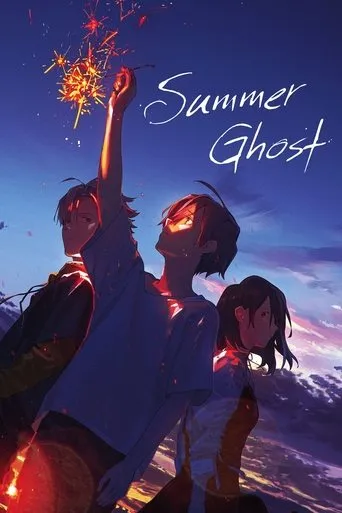
A child's war diary where the real enemy is history itself — and nobody wins.
A young Japanese actress remembers her war childhood in Korea. Her father goes to fight, her baby sister Miko dies of typhoid, her beloved Korean maid Ohana is fired due to a mistake which could cost Chiko her life... By and by Chiko realizes that the country is being ruled by the Japanese and the Koreans are persecuted. When the war ends, the Koreans chase the Japanese rule and the roles change. Now Chiko's family is unwanted. But then the Russians come and this is the end. They have to burn all the pictures to avoid all suspicions... even Miko's picture. But when the Russians come to their house, they decide to flee over the 38th Parallel towards freedom. A group of men, women, children struggles along the mountains, led by the light of the Northern Star. Along the way they meet a Korean man, who is willing to help them to escape the Russian soldiers although his family was killed by the Japanese.
Direction
Hirata's restraint lets horror breathe without spectacle.
Writing
Chiko's slow realization of injustice is devastatingly earned.
Director
Satoru Namekawa

Yoshino Takamori
Chitose "Chiko" Kobayashi (voice)

Hideyuki Tanaka
Kazuhiko Kobayashi (voice)

Keiko Han
Masuko Kobayashi (voice)

Kenichi Ogata
Takeshi (voice)

Chika Sakamoto
Michiyo "Miko" Kobayashi (voice)

Reiko Suzuki
Shigeko (voice)

Tomoko Maruo
Ohana (voice)
Shinpachi Tsuji
Sano (voice)

Hideyuki Umezu
Takayashi (voice)

Chafurin
Village chief (voice)

Issei Miyazaki
Yong-il (voice)

Michiko Neya
Hatsue (voice)

Koji Ishii
Interpreter (voice)
Trivia, insights & behind the scenes
Based on autobiographical stories by Chitose Kobayashi, who lived this escape at age seven; the film was rarely distributed outside Japan, partly due to its uncomfortable portrayal of Japanese colonialism.
The Northern Star navigation metaphor quietly inverts: what guides you to safety also marks you as fleeing — direction itself becomes dangerous.
No ratings yet
Sign in to join the discussion — comments are spoiler-gated to your watch progress.
Discussion starters


 JP
JP